ENSU –
The Role of Energy Sufficiency
in Energy transition and society
Welcome to the homepage of the junior research group “The Role of Energy Sufficiency in Energy Transition and Society” – short EnSu.
On our website you can find information on our research and the project as well as on our publications and upcoming events.

EnSu presentations at the ECEEE
At the Summer Study of the European Council for an Energy Efficient Economy (eceee), which took place in France in June 2024, EnSu members Carina Zell-Ziegler, Johannes Thema and Alexander Kling gave a total of 4 presentations. The positive feedback in the discussions showed that EnSu research on the topic of energy sufficiency is relevant and can close existing research gaps. The exchange with many other conference participants from research and practice, including at a co-organized “informal...
Expert discussion of the Parliamentary Advisory Council on Sustainable Development
Recording of the German-language online seminar “Basic course on sufficiency”
Manifesto for sufficiency: towards mainstreaming sufficiency in EU policies
Putting sufficiency into practice: The Hafen-Ost real-world laboratory in Flensburg, Germany
Discussion between the ÖNK and members of the Bundestag on the political feasibility of sufficiency
go to post archive
our research interest
How can energy sufficiency be defined and distinguished from other strategies?
What hinders the implementation of sufficiency policies and measures?
What characterizes successful transformation strategies which encompass energy sufficiency?
How can the effects of succiciency be described, evaluated and quantified?
Which multiple effects of energy sufficiency measures can be described (quantitatively and qualitatively)?
How can energy scenarios be developed in inter- and transdisciplinary processes?
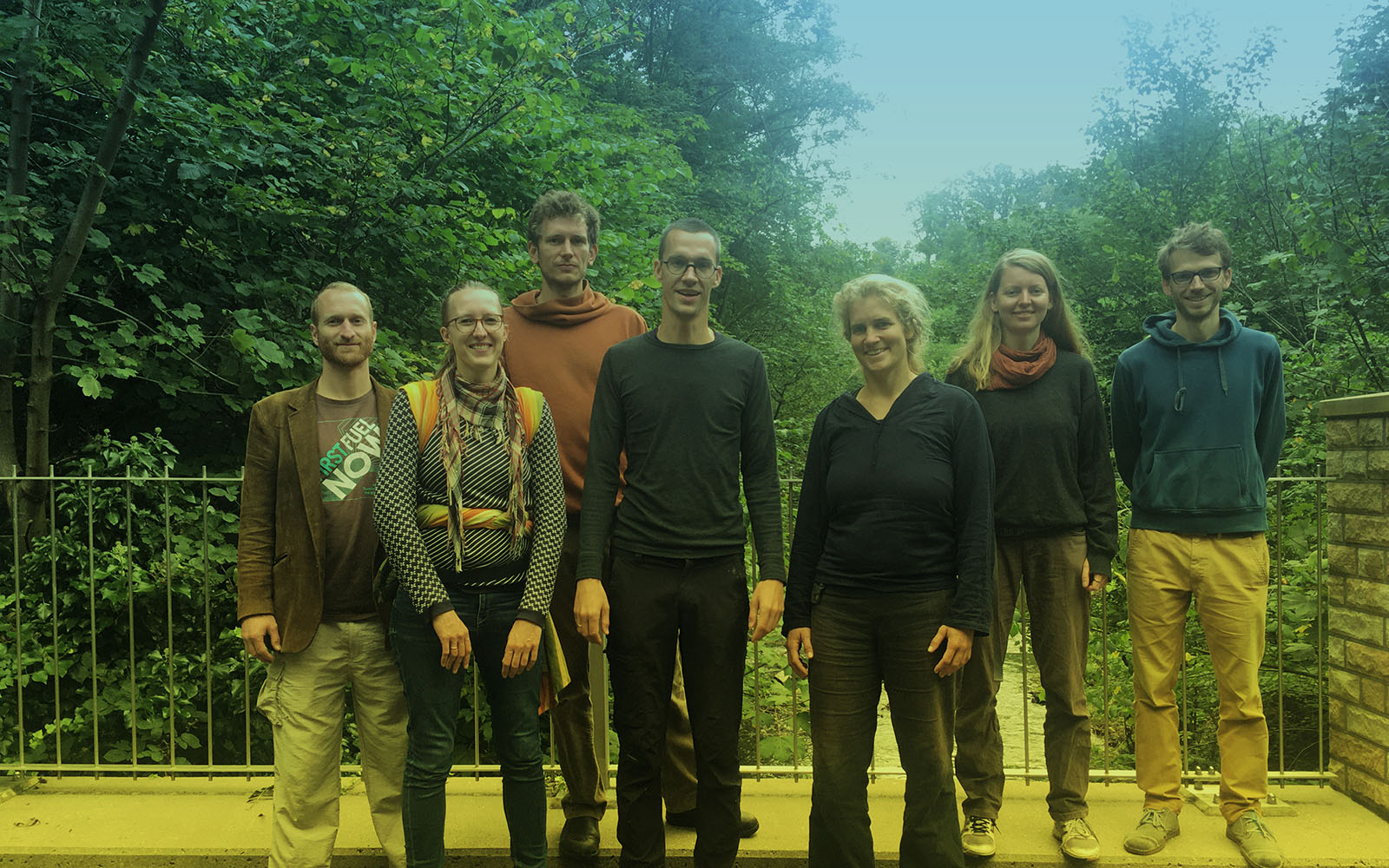
The Ensu Team
The junior research group “The role of energy sufficiency in energy transition and society” (EnSu) will systematically include sufficiency strategies in energy system modelling and discuss the current and necessary societal frame conditions for establishing energy sufficiency strategies.
INSTITUTIONS INVOLVED

How can energy consumption decrease in absolute terms?
How can societal change be integrated in energy modelling?
These questions are in the center of the research activities of the junior research group “EnSu – The Role of Energy Sufficiency in Energy Transition and Society” that started in May 2020. The project is funded by the German federal ministry for education and research (BMBF) within the research framework for sustainable development (FONA).
Six junior scientists working at the Öko-Institut (Freiburg), the Wuppertal Institute for Climate, Environment, Energy and at the Europa University Flensburg (EUF) aim at studying the transformation processes of society in the context of the Energiewende and making the insights applicable to energy system modelling.